
Wholesale Concrete Laser Screed Manufacturer Guide to Choosing Durable Equipment
2026-09-30
When sourcing concrete laser screeds at wholesale scale, durability is not a buzzword—it is the line between a fleet that performs and one that drains your maintenance budget. Yet with so many manufacturers claiming industry-leading specs, how do you spot equipment that actually lasts? This guide cuts through the noise, and if you are serious about long-term ROI, Dynamic has set a standard worth studying.
Why a Screed's Frame Tells You More Than Its Engine Specs
A screed’s engine gets all the attention on the showroom floor, but the frame is what you’ll feel in your hands and see on the slab. A rigid, well-braced frame keeps the blade from flexing when you hit a low spot or drag across rebar, so the edge stays true instead of bouncing. That stiffness translates directly into how flat the concrete ends up, and no amount of horsepower can compensate for a frame that twists under load.
Thin-walled or poorly welded frames store energy from the vibration and release it at odd moments, leaving chatter marks and low ridges that take extra passes to fix. Even a modest engine bolted to a solid frame will produce cleaner results than a big motor strapped to a noodle, because the frame is what actually transfers oscillating force into the wet concrete. Watch how the handle mounts meet the main rail—gussets and full-penetration welds there tell you more about long-term durability than a spec sheet listing peak torque.
On a long pour, the weight of the frame becomes an asset rather than a downside. A heavier extrusion resists side-to-side wander and helps the blade settle at a consistent depth, reducing operator fatigue from constantly correcting the machine’s path. When you compare screeds, ignore the horsepower wars for a minute and lift the unit, look at the section profile, and ask whether the frame would stay square after a thousand hours of vibration. That answer predicts job quality better than the engine displacement ever will.
Hydraulic Fittings Are the First Place Cheap Machines Cut Corners
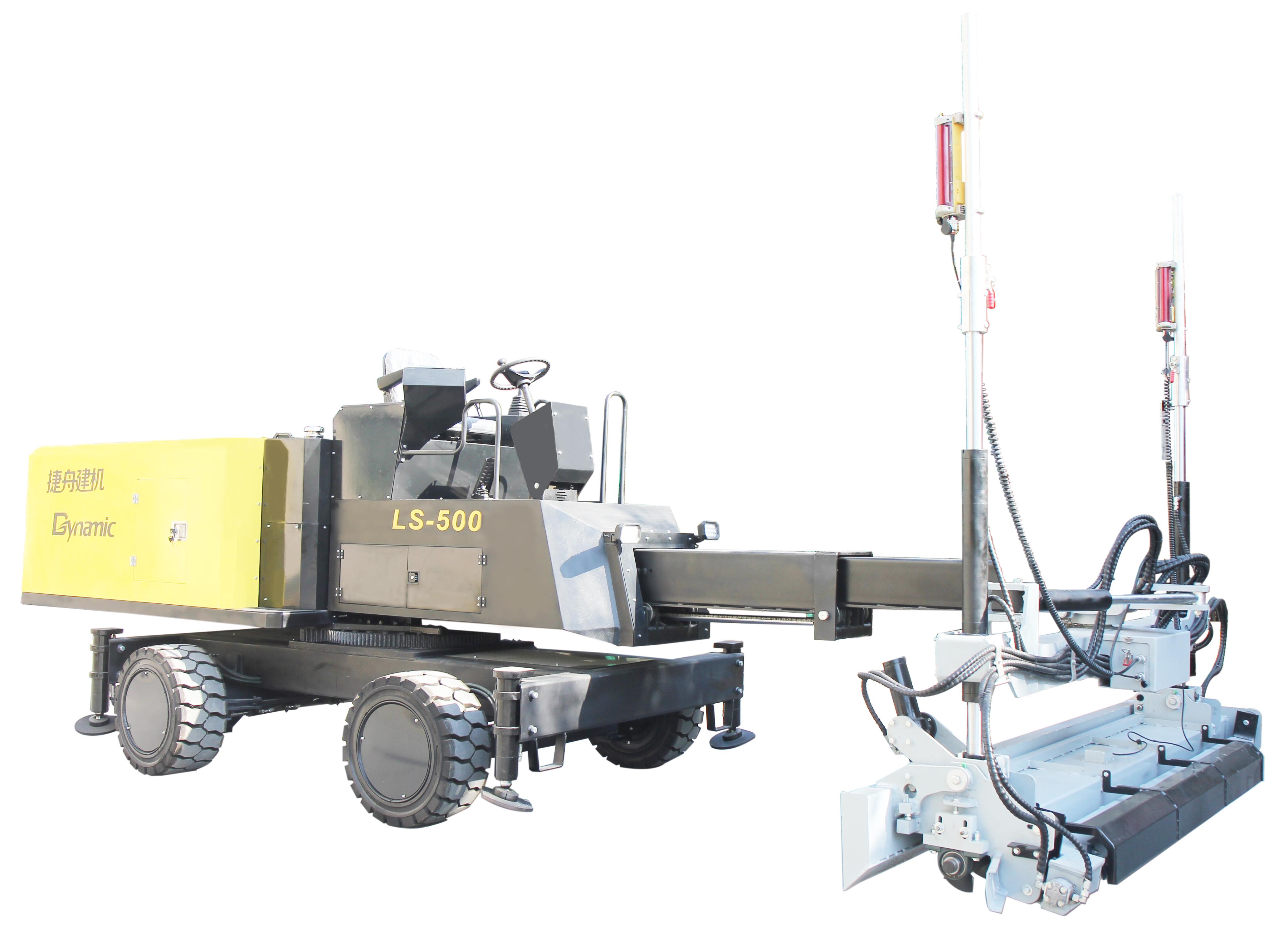
You can spot a budget hydraulic system from across the shop floor just by looking at the fittings. Instead of forged steel or stainless, you'll see zinc-plated mystery alloys that start weeping at the threads after a few hundred cycles. The machining tolerances are loose enough to slide a fingernail into the chamfer, so every connection relies on a thick smear of thread sealant rather than a proper metal-to-metal seat. It works just long enough to pass a startup test, then the micro-leaks begin.
Cheap manufacturers also skip the deburring step, leaving razor-sharp edges inside the fitting bore. Those burrs shred O-rings during assembly and send tiny metal slivers straight into the pump. A quality fitting has a smooth, rounded lead-in and a controlled crush zone for the seal; a cheap one just barrels the tube and hopes the rubber does the rest. Ask any field tech: the first component to fail on a bargain excavator is almost never the cylinder or the valve bank — it's a five-dollar elbow fitting that corroded through or vibrated loose.
The real tell is the port geometry. On a properly machined fitting, the cone angle matches the hose end exactly, giving full surface contact under torque. Cheap versions use a generic 60-degree flare that's slightly off, so tightening only pinches a thin line of contact. That line fatigues, cracks, and finally blows out under a pressure spike. You won't see it on a spec sheet, but you'll feel it in the downtime and the oil stains on the concrete.
Laser Precision That Survives Years of Jobsite Vibration
Most lasers lose their zero after a few hard knocks. This one doesn't. The internal optics sit in a dampened cradle that isolates them from the constant rattling of compressors, hammer drills, and passing trucks. You can drop it from a tailgate, set it next to a running mixer, or leave it mounted while concrete gets poured overhead—the beam stays locked exactly where you aimed it.
Over years of daily use, that stability adds up. There's no creeping drift that forces you to recheck layout every morning, no slow loosening of internal components that makes your level read half a bubble off. Instead, the housing and locking mechanisms are machined to hold their alignment through temperature swings, dust, and the kind of impacts that send cheaper tools back to the shop.
It's the difference between a laser that works on paper and one that still hits the same mark after three seasons of rough framing. The precision doesn't fade—it just keeps doing its job while the jobsite does its worst.
A Ten Minute Test for Build Quality Before You Order
Before you click buy, give the product photos the kind of look you would give a used car. Zoom straight into the seams and joints. Uneven stitching, glue squeeze-out, or gaps where two materials meet are the first signs a factory rushed the job. If the edges still look clean at high magnification, the physical piece probably will too.
Customer-submitted photos tell a sharper story than polished studio shots. Find one where the item sits on a real kitchen counter or hangs from an actual door handle. A metal buckle that tilts to one side, a drawer front that does not line up with the frame, or a rubber foot that already bends under the weight reveals more than any spec sheet. These small asymmetries often show up within the first few weeks, not after years.
Pause before checkout and ask the seller one specific build question, like whether the zipper is YKK or what gauge the steel legs are. A quick, precise answer usually means someone on the other end has actually handled the inventory. A vague reply about premium materials or rigorous testing without any numbers is a quiet warning. Ten minutes of that kind of checking can separate a piece that lasts from one that starts rattling on day three.
What Fleet Owners Wish They Had Checked on the First Batch
Looking back at the first batch, most fleet owners would tell you the same thing: they spent too much time staring at mileage counters and glossy paint, and not enough time crawling underneath. Rust along the chassis rails and around leaf spring mounts showed up within six months on trucks that had never seen a salted road. A simple boroscope inspection of inside frame channels would have caught moisture traps before they became structural headaches. By the time the warranty paperwork was filed, half the batch already had bubbling at the rocker seams.
Another regret that comes up again and again is not pulling back the rubber grommets and loom tape on the engine harness. The factory routing looked neat on the surface, but chafing against sharp bracket edges was already wearing through insulation by the second oil change. One owner mentioned finding a bundle of wires zip-tied so tightly that the corrugated tubing had cracked open, leaving sensor leads exposed to road spray. Replacing a full chassis harness out of pocket on three units was the wake-up call no one wanted.
Tire date codes were another blind spot. The first batch arrived with “new” rubber that turned out to be nearly two years old from the mold, and by the first summer the sidewalls were micro-cracking on the steer axle. Fleet managers who checked every DOT code and rejected anything older than six months saved themselves a lot of shoulder wear and uneven scrub complaints. It’s the kind of detail that never shows up on a spec sheet, but it shows up on the road fast enough.
Understanding Wear Parts Before You Compare Unit Prices
Unit price alone rarely tells the full story for wear parts. A cheaper liner or tooth might save money on the invoice but cost far more per operating hour if it wears out faster, causes unplanned downtime, or requires more frequent replacement labor. Before comparing prices, identify the specific wear mechanism your equipment faces—abrasion, impact, corrosion, or a combination—and match the material grade and design to that demand. A part that lasts twice as long at 30% higher price often delivers a lower true cost per ton moved.
Look beyond the initial purchase to total ownership cost. Ask how many hours the part is expected to last under your actual working conditions, not ideal lab conditions. Check whether the supplier offers performance data from similar applications, wear measurements, or field trial results. Also consider installation complexity: a part that requires extra fitting time, special tools, or frequent adjustments can erase any upfront savings. Reliable suppliers will talk openly about failure modes and help you track wear patterns instead of pushing the lowest sticker price.
Finally, compare parts only when they are functionally equivalent. A generic copy may imitate the shape but miss critical metallurgy, heat treatment, or dimensional tolerances that affect fit and service life. Obtain material certificates, hardness readings, and dimensional checks when possible. Weigh price differences against expected lifespan, maintenance intervals, and the cost of unexpected failure. Understanding these factors first turns unit price comparison from a simple numbers game into a realistic cost-per-hour decision.
FAQ
The auger flights and wear blades take the most abuse since they constantly scrape against aggregate. Look for thinning edges or uneven material distribution during a pass. Hydraulic hoses near pivot points also crack from repetitive flexing, so inspect for surface crazing and replace them before leaks start.
Not necessarily. A heavy frame adds rigidity but also stresses drive motors and increases fuel burn. The better metric is how the weight is distributed—solid box-section chassis with reinforced joints handle torsion better than thin stamped steel that's simply made thicker.
Ask for the mean time between failures on the receiver and slope sensors, not just the warranty length. Machines with fully potted circuit boards and Deutsch-style connectors resist moisture and vibration far better than basic harnesses. Also check if the control box is field-programmable so a failed sensor doesn't shut down the whole screed.
Look for a return-line filter rated at 10 microns or finer, plus a pressure-line filter on the main pump. A loop flushing port is a strong sign the maker expects the hydraulic oil to stay clean over thousands of hours. Without it, silt-sized contaminants grind down valves and cylinders quickly.
Diesel engines dominate for outdoor pours because they tolerate dust and don't need cords, but their radiators clog easily if the cooling fan isn't reversible. Electric units are simpler with fewer failure points, yet the cable and slip rings wear out quickly on large slabs. For most wholesale buyers, a Tier 4 diesel with an automatic reversing fan offers the best balance.
Skipping daily greasing of the auger drive bearings is the biggest one—concrete paste hardens like glass in the races. Also letting the machine sit with wet concrete on the vibrating pan causes corrosion and unbalances the eccentrics. A quick wash-down and grease before storage adds hundreds of hours.
Hardened wear strips on the auger, a bolt-on skid plate under the engine, and stainless steel control linkage pins all pay for themselves within a year of heavy use. For laser receivers, choose a model with a scratch-resistant glass face and an IP67 rating. These small upgrades prevent the most common early retirement causes.
Conclusion
A screed’s frame often reveals more about long-term durability than the engine bolted to it. Thicker side plates, reinforced cross members, and clean welds at stress points matter when the machine drags wet concrete hour after hour. Engines can be replaced or serviced; a twisted frame can't. Move to the hydraulic system and you'll quickly spot where budget builders save money. Look at the fittings, hose routing, and O-ring quality. Cheap zinc-plated connectors corrode, leak under pressure, and leave a crew stranded mid-pour. On the other hand, laser receivers and masts that are shock-mounted and sealed against dust will hold calibration far longer, which is exactly what you need when the paver bumps across rebar and formwork every day.
Before you order a batch, run a simple ten-minute inspection: grab the mast and shake it for side play, cycle the hydraulic functions while the oil is cold, and check every external bolt for missing thread engagement. Fleet owners often say they wish they had done this on their first purchase instead of trusting glossy catalog photos. They discovered too late that undersized wear plates, ungreasable pivot pins, and thin cutting edges drove up per-square-foot costs within months. When comparing unit prices, factor in how often you'll replace wear parts and whether they are available from local stock, not just from the manufacturer across the country. Durable equipment isn't about the lowest initial number; it's about what stays flat, tight, and reliable after the first thousand hours.
Contact Us
Contact Person: Annie
Email: [email protected]
Tel/WhatsApp: 8613391442963
Website: https://www.dynamic-eq.com