
Substantial Flour Processing Machinery: A Guide to Boosting Your Mill's Capacity
2026-07-28
Every flour mill eventually hits a wall—demand spikes, aging equipment can’t keep up, and expansion feels out of reach. You don’t need a complete overhaul; you need strategic upgrades that maximize throughput without breaking your budget. That’s where this guide comes in, spotlighting the kind of robust flour processing machinery that turns bottlenecks into breakthroughs. With insights on everything from roller mill optimization to sifting efficiency, you’ll discover how brands like PINGLE are redefining what’s possible in capacity boosting. Ready to mill smarter, not harder? Let’s dive in.
Rethinking Your Equipment Lineup for Throughput Gains
Too often, throughput bottlenecks aren’t caused by a single slow machine—they’re the result of mismatched capacities along the line. One piece of equipment running at full tilt can drown the next in a backlog, while another sits idle, starving for work. Instead of chasing ever-faster individual units, step back and look at the line as a connected system. A modest adjustment to a conveyor speed or a small buffer addition between workstations can sometimes unlock more flow than a six-figure machine upgrade.
It’s also worth questioning long-standing assumptions about changeover times and batch sizes. Many operations default to large batches to reduce per-unit setup cost, but that often ties up equipment and creates hidden queue time that cripples throughput. Experiment with smaller batches and more frequent changeovers—paired with quick-change tooling and standardized setups—and you may find that the liberated capacity outweighs any perceived efficiency loss. The equipment you already have might be capable of far more flexibility and output than your current schedules allow.
Finally, don’t underestimate the role of visibility. Simple data collection—like tracking real-time cycle counts and downtime reasons—can expose patterns that gut throughput in ways a walkthrough never will. When teams see exactly where and why flow breaks down, they naturally start suggesting pragmatic workarounds: relocating a shared fixture, reassigning a multi-skilled operator, or even just painting a staging area on the floor to prevent pileups. These low-cost fixes, inspired by watching the system rather than the spec sheets, often turn an average lineup into a high-throughput engine.
Fine-Tuning Processes to Squeeze Out Extra Capacity
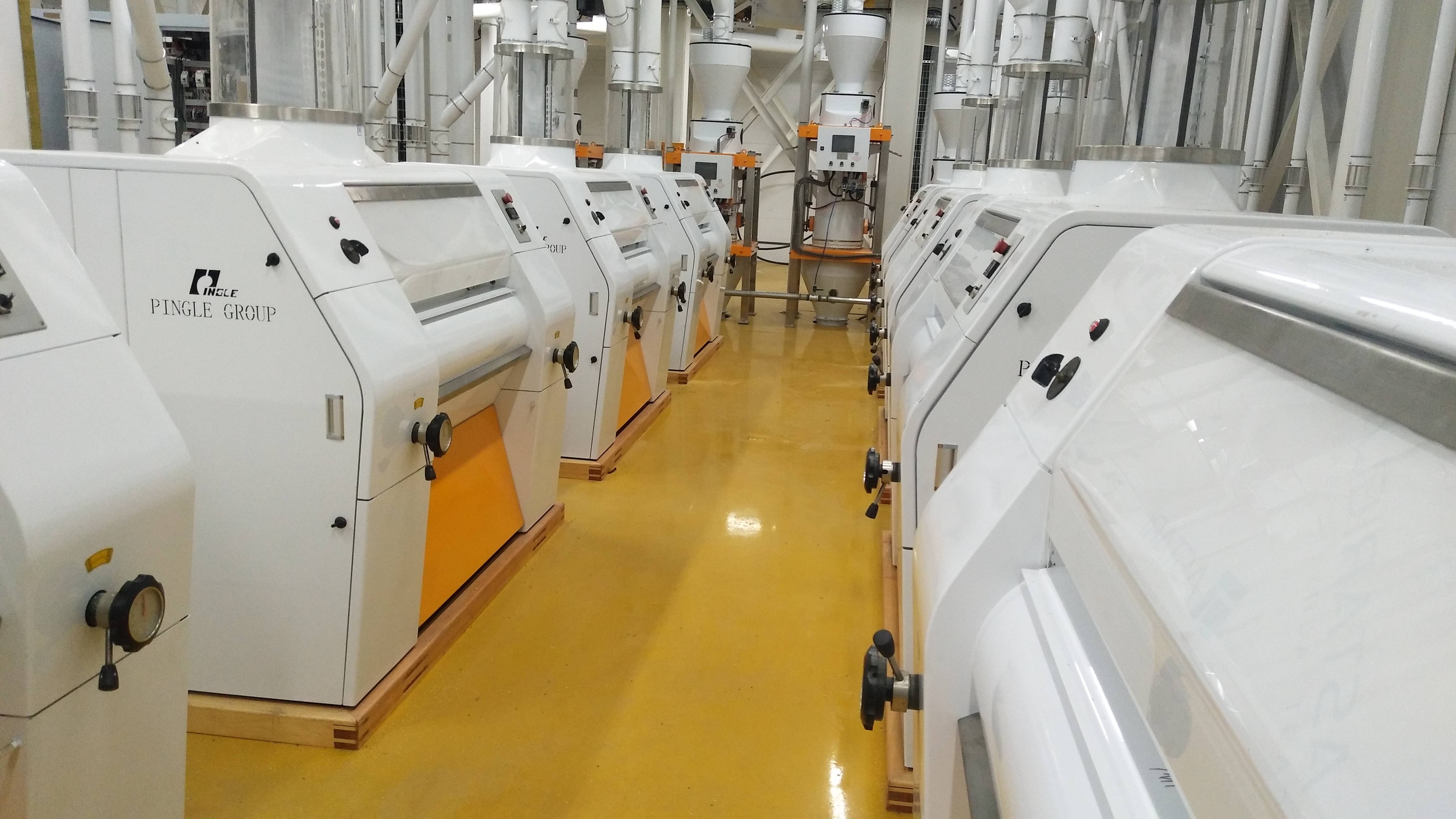
When every machine is already running at full tilt, it's tempting to believe there's nothing left to give. But that often signals a chance to stop staring at output reports and start watching how work actually flows. Small, almost invisible delays—like an operator waiting for a forklift or a batch hanging because someone's searching for missing documentation—accumulate into hours of lost production time. Mapping out each step, timing it, and challenging why it exists the way it does can uncover pockets of idle time you never knew you had.
Sometimes the biggest gains come from rethinking the handoffs between stages. Instead of aiming for the fastest individual operation, figure out where inventory piles up and where it runs dry. Adjusting those balance points can let lines keep moving without overloading any single area. A few targeted tweaks—rearranging tools to cut motion, synchronizing shifts around natural equipment cycles, or simply clarifying who does what during changeovers—often delivers capacity gains that no amount of capital spending could manage.
The Overlooked Role of Preventive Maintenance in Uptime
When systems fail, the post-mortem usually focuses on what broke and how fast it got fixed. But that narrow lens misses a quieter, steadier force at work: the regular, unglamorous checks that stop failures from happening in the first place. Preventive maintenance isn't about heroics. It's about monotony—lubricating parts, swapping filters, scanning logs for subtle shifts. And yet, this monotony is what keeps the lights on when competitors are scrambling.
In many organizations, uptime is treated as a reactive metric—something you defend after an outage. That mindset overlooks how preventive routines actively shape reliability. A well-timed bearing replacement or a firmware update done during a low-traffic window doesn't make headlines, but it prevents the cascading failures that do. The real challenge isn't technological; it's cultural. Teams have to value the invisible win as much as the dramatic save.
There's also a deeper illusion at play: the belief that more advanced monitoring can replace physical upkeep. Sensors and alerts are valuable, but they're diagnostic, not therapeutic. A vibration sensor can warn of wear, but it can't grease a joint. The plants with the highest uptime aren't necessarily the ones with the most AI; they're the ones where someone still walks the floor with a checklist and a trained ear.
Smart Automation That Doesn't Overcomplicate Operations
Automation should work for you, not the other way around. Many systems pile on complexity, forcing teams to relearn workflows or babysit finicky triggers. Our approach keeps things simple: it plugs into what you already do and handles repetitive tasks behind the scenes. You won't need a manual or a consultant to get started, just a few clicks to set rules that make sense for your day-to-day.
We focus on practical, no-frills automation that adapts as you grow. Instead of rigid templates, you can tweak actions on the fly or pause them without breaking anything. The goal is to free up time for the work that matters, not to turn your operation into a science experiment. Real automation should feel invisible, not like another chore.
The best part? It plays nicely with the tools you already have, without demanding a complete overhaul. Forget about chasing compatibility updates or mapping out convoluted sequences. We believe that when technology quietly handles the busywork, your team can focus on the human side of the business. That's the kind of automation that actually makes a difference.
Material Handling Tweaks That Reduce Bottlenecks
Sometimes the smallest adjustments to how materials move through a facility can have the biggest impact on productivity. One often-overlooked tweak is simply rethinking staging areas. By positioning raw materials closer to their point of use and clearing unnecessary clutter from walkways, you cut down on the non-value-added travel time that slowly eats away at throughput. Even consolidating multiple trips into a single, well-planned delivery route can remove hidden bottlenecks that form when teams wait for supplies.
Another approach is to audit the flow of returnable containers and waste. A buildup of empty pallets or scrap bins near workstations isn't just a housekeeping issue—it creates physical barriers that force operators to work around them or halt production to clear space. Assigning dedicated, frequent collection times with clear ownership prevents these accumulations from turning into full-blown obstructions. The key is treating reverse logistics with the same urgency as forward material supply.
Don't overlook the role of simple visual cues either. Floor markings that designate specific drop zones, color-coded racks for different part types, or even signage indicating maximum stack heights can streamline decisions and reduce hesitation. When everyone in the area instantly knows where to place incoming items or which materials take priority, the constant micro-delays that add up to a major bottleneck start to disappear. Often, it's this kind of low-cost, high-return tweak that keeps operations running smoothly without capital investment.
Staff Training as a Capacity Multiplier
When teams truly grasp their roles, something shifts beyond mere task completion. It’s not about memorizing protocols—it’s about unlocking a collective ability to handle complexity. A well-trained staff member doesn’t just perform; they multiply what the whole group can achieve. They spot inefficiencies that others miss, mentor newcomers without being asked, and turn everyday hurdles into learning moments. This kind of growth feeds on itself, turning a group of individuals into a self-reinforcing engine of progress.
The real multiplier effect kicks in when learning becomes a constant, not an event. Picture a workplace where curiosity is baked into the rhythm of the day. A single improvised solution, shared in a morning huddle, can cascade across teams and evolve into a better standard practice. Suddenly, one person’s insight elevates everyone’s baseline. That’s the shift from training as a checkbox to training as a force that reshapes how work happens—quietly, persistently, and with far less effort than constant reshuffling.
But here’s the catch: none of this works if training feels like a scripted performance. The most powerful upskilling happens when people connect the dots themselves, not when they’re force-fed answers. Give a team the context behind a new approach, and they’ll adapt it in ways no manual could predict. They’ll fight for a smarter method because they own it. That’s when capacity stops being a fixed number and starts behaving like something alive—growing, changing, and amplifying everything you ask of it.
FAQ
Roller mills are often the first place to look. Swapping older single-pass rollers for modern multi-stage units can raise throughput significantly without overhauling your entire line. Pair this with a high-speed plansifter, and you'll see a jump in the amount of flour you can bag per shift. These upgrades focus on the heart of the milling process, so the return tends to be immediate.
Start by mapping out your current bottlenecks. Run the mill at full tilt for a week and log where delays pile up – maybe it’s the cleaning section, maybe the packing station. Then compare that data with your target capacity. The gap will tell you whether you need a bigger scourer, an extra tempering bin, or a faster pneumatic conveyor. Involve your floor operators; they often know the weak points better than any manual.
Absolutely. Manual sifting is not just slow, it’s inconsistent. Adding automated plansifters with precise mesh controls can bump your extraction rate by a couple of percentage points, which on a large scale means hundreds of extra kilos each day. It also frees up staff to monitor other quality steps, reducing human error that leads to re-runs.
A lot more than people credit it. If your cleaning line is undersized, you’ll feed dirty grain into the first break, which wears down rollers faster, causes more downtime, and lowers the quality of the flour. A modern combi-cleaner that handles stones, dust, and imperfect kernels in one pass keeps the mill running at its rated speed without hiccups.
Frame it around lost opportunity, not just the price tag. Show them how many tonnes you’re leaving on the table each quarter because of slow or failing equipment. Put a dollar figure on the avoided waste, reduced energy use, and fewer overtime hours. A simple payback calculation often does the trick—most well-chosen upgrades cover their cost within 18 months.
The biggest one is underestimating infrastructure. A new 10-tonne-per-hour mill won’t do much good if your bin storage or loading docks can’t keep up. Another trap is ignoring vibration dampening; heavy machinery shakes the building, which can throw off alignments and create safety issues. Finally, training gets shortchanged—teams need real hands-on time with the new controls before go-live.
For rollers, a thorough check every 500 running hours is a good rhythm, but listen to the sound of the mill: a change in hum often signals wear. Sieves need a close look weekly, especially if you’re running abrasive grains. Catching flaking chrome or a torn sieve cloth early prevents an unplanned stoppage that can wipe out a whole day’s production.
It depends on your cash flow and the age spread of your kit. If most machines are within a few years of each other and showing their age, a phased full-line replacement avoids compatibility headaches later. But if only one or two units are dragging you down, targeted upgrades keep the business running while you spread out the spend. Just be wary of creating a patchwork where old and new don’t talk to each other.
Conclusion
Boosting your mill's capacity isn't simply about running machines faster—it demands a holistic re-evaluation of your entire processing chain. Start by rethinking your equipment lineup: sometimes swapping out a single underperforming sifter or roller mill for a modern, higher-throughput model can unlock flow without expanding the footprint. But hardware alone won't carry the load. Fine-tuning processes, such as adjusting roll gaps, optimizing screen tensions, and balancing airflows, often squeezes out an extra 10–15% capacity that's been hiding in plain sight. These refinements work best when supported by a disciplined preventive maintenance program, because neglected bearings, worn belts, or dusty cyclones quietly erode uptime and force the whole system to limp along. Overlooking maintenance is like leaving money on the floor.
The real multiplier effect comes when you integrate smart automation that doesn't overcomplicate operations. Simple, intuitive controls for feed rates, blending, and monitoring let operators react faster without drowning in data. Equally important are material handling tweaks that reduce bottlenecks: widening chutes, synchronizing conveying speeds, or adding surge bins can smooth out the lumps that starve downstream equipment. Finally, recognize that your staff is part of the machine. Invest in targeted training—not just in button-pushing, but in understanding flow dynamics and troubleshooting—and you turn a good team into a capacity multiplier. Together, these changes build a resilient mill that consistently delivers higher output without sacrificing quality or sanity.
Contact Us
Contact Person: Jiakuo Wu
Email: [email protected]
Tel/WhatsApp: +86-13011566087
Website: https://www.pinglemachine.com