
HDP PPGI Supplier Guide to Sourcing Durable Pre-Painted Steel Coils
2026-10-04
Sourcing durable pre-painted steel coils doesn’t have to feel like a leap of faith. If you’ve ever wondered why two coils with the same paint code perform differently in the field, you’re not alone. LANYUN has spent years refining HDP PPGI production, and this guide distills what actually matters—coating adhesion, UV resistance, and long-term corrosion performance—so you can buy with your eyes open.
Why High-Durability Polyester Outperforms Standard Coatings
Most conventional coatings cure into a relatively loose film. High-durability polyester, by contrast, is formulated so that its polymer chains form a much denser crosslinked matrix. That subtle change in chemistry is what keeps moisture, oxygen, and UV light from eating into the resin. On a building exterior, the result shows up as color that stays closer to the original spec and a surface that does not turn chalky after a few harsh summers.
Laboratory weathering data tells the same story. Under accelerated QUV testing, standard polyester finishes often lose 50% of their gloss within 1,000 hours. High-durability grades routinely exceed 2,500 hours before showing similar degradation. The tougher film also shrugs off abrasion, bird droppings, and acid rain far more effectively, which means fewer callbacks and less frequent recoating for building owners.
That durability translates directly into lower long-term cost. A slightly higher initial price is typically recovered after the first avoided repaint cycle. When maintenance access is difficult or downtime is expensive, specifying a coating that holds up under real-world abuse simply makes more sense than saving a few cents per square foot upfront.
Reading a Mill Certificate Like a Seasoned Buyer
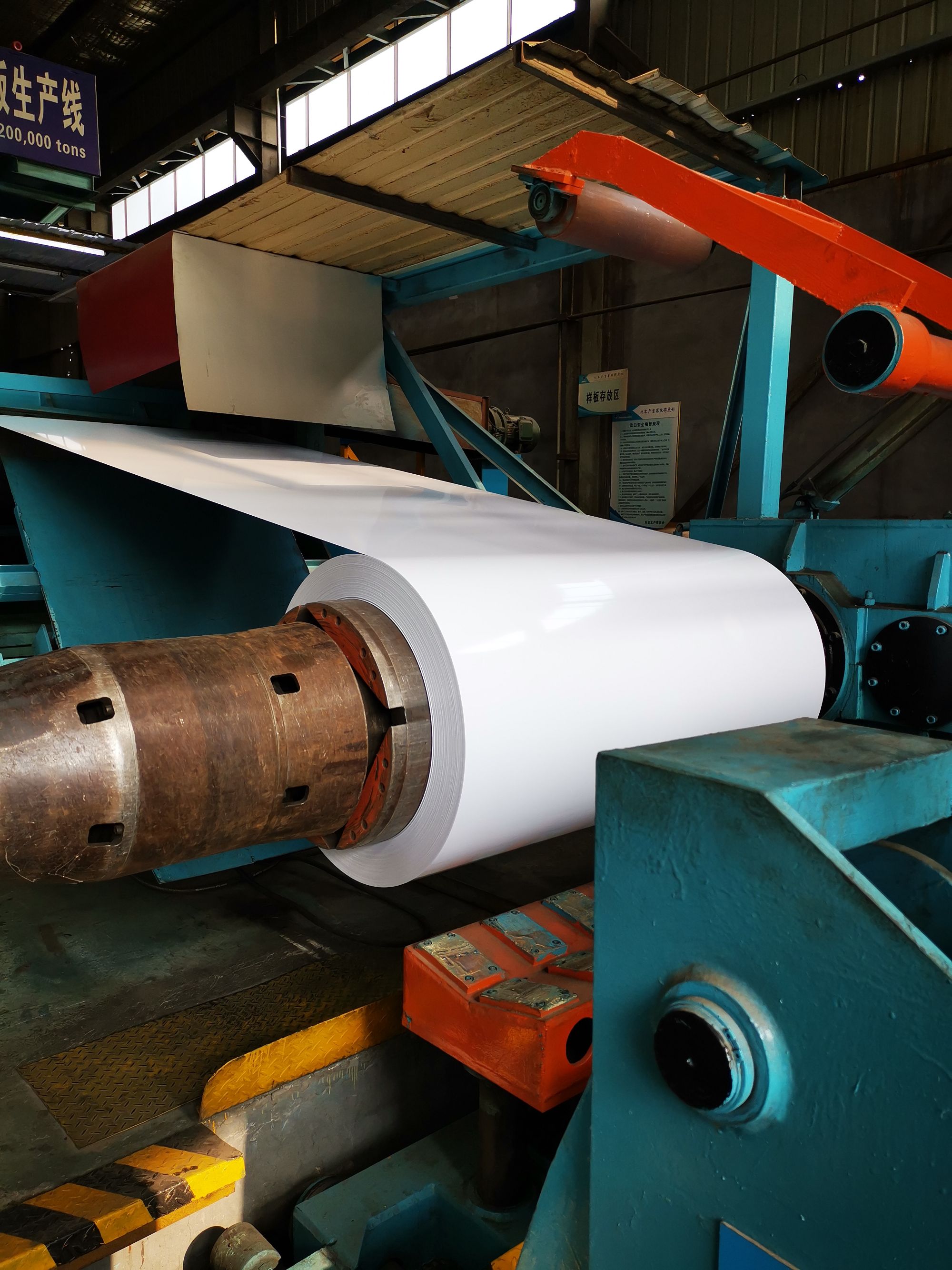
A mill certificate isn't just a piece of paper—it's the fingerprint of the steel you're about to put into service. Most buyers glance at the grade and move on, but a seasoned eye immediately checks the heat number against the physical tags on the material. That simple cross-reference has saved more than one project from a costly mix-up in the yard.
Beyond the basics, look hard at the chemical composition and mechanical properties. Numbers that sit right at the edge of the specification might still pass, but they often signal a batch that behaved differently during rolling or heat treatment. A buyer who notices a yield strength hovering near the minimum might ask for additional testing or simply choose a different heat—an instinct that comes from seeing how borderline values play out in the field.
Finally, pay attention to what isn't there. Missing information about impact testing, a vague reference to a supplementary requirement, or a signature that's just a stamp with no date can all be red flags. Seasoned buyers treat a mill certificate as a living document: they verify it, question it, and never assume that because it's official, it's accurate.
The Salt Spray Test Isn't Everything: What Actually Predicts Field Life
The salt spray test has long been the default benchmark for corrosion resistance, but anyone who has watched a component pass 1,000 hours in the chamber only to rust within months outdoors knows there is a glaring disconnect. The test accelerates one specific failure mode—steady, wet, salty fog—while real-world exposure cycles between dry heat, condensation, ultraviolet light, and chemical pollutants. As a result, salt spray hours rarely translate into actual service life, and over-reliance on this single metric can lead to premature material selection or a false sense of durability.
What actually predicts field life is a combination of cyclic corrosion testing, electrochemical impedance spectroscopy, and long-term outdoor exposure data from comparable climates. Cyclic tests such as GMW 14872 or ISO 16701 incorporate drying phases and temperature shifts that replicate how corrosion products form and then crack, allowing fresh electrolyte to reach the substrate. Electrochemical methods reveal the underlying barrier properties and coating delamination rates that salt spray cannot see. More importantly, real-world correlation studies—where identical panels are placed on vehicles or structures across different regions—provide the ground truth that no accelerated test can fully replicate.
The smart approach is to use salt spray only as a quick screening tool for gross coating defects, not as a predictor of lifespan. When engineers demand a single number for field life, they are asking the wrong question. Instead, consider the specific environmental stressors: time of wetness, chloride deposition rate, UV dose, and temperature extremes. Then match the test protocol to those stressors. A coating that survives 2,000 hours of neutral salt spray may fail in six months on a coastal bridge, while a system with modest salt spray results but excellent cyclic performance and proven outdoor track record will outlast it by years. Trust the correlation data, not the fog.
Questions That Reveal a Supplier's True Coating Capability
Most buyers ask about turnaround and price, but those numbers mean little until you dig into how a supplier handles surface preparation, masking, and edge coverage. Ask for process control data from their last three runs—not just a certificate, but actual thickness readings taken at multiple points on a complex geometry. A shop that can show you variability under ±0.0002 inch on a threaded part is operating at a different level than one that only measures flat coupons.
Follow up with questions about rework and failure history. What happens when a batch comes back with adhesion loss or pinholes? A capable coater will walk you through their root-cause analysis, show photographed cross-sections, and explain how they adjusted cure time or pretreatment chemistry. If the answer is "we've never had a problem," treat it as a red flag. Real coating expertise lives in how a supplier recovers from the 2% that goes wrong, not in the 98% that goes right.
Balancing Upfront Cost Against Lifecycle Value in Coil Selection
When choosing coils for HVAC or refrigeration systems, the lowest purchase price can quietly turn into the most expensive decision over time. A cheap coil might save a few hundred dollars on day one, but if it corrodes early, loses thermal efficiency, or demands frequent cleaning, those savings evaporate through higher energy bills and unplanned downtime. Facility managers who look only at the invoice rarely account for the hours spent troubleshooting a coil that should have lasted twice as long.
Lifecycle value hinges on materials, fin spacing, and protective coatings that match the operating environment. For example, a coastal installation with salt-laden air may require epoxy-coated fins and a heavier tube wall, which raises initial cost but prevents pitting and leaks within three years. Similarly, wider fin spacing in dusty or industrial settings reduces clogging, keeping airflow steady and compressors from working harder than necessary. These choices feel like overengineering until you compare the cost of a replacement coil, refrigerant recovery, and lost production against the upfront premium.
A practical approach is to calculate total cost of ownership over the expected service life—say, ten to fifteen years. Include energy consumption, maintenance labor, chemical cleaning, and the risk of early failure. Often, a coil costing 20% more upfront pays for itself within two to four years through lower pressure drops and fewer service calls. Working with a manufacturer who provides corrosion resistance data and thermal performance curves, rather than just a price sheet, helps balance short-term budgets against long-term reliability.
Receiving, Storing, and Handling: Protecting Your Investment Before Forming
Receiving isn't just about signing the paperwork. Unwrap a few coils or sheets at random and check for transit damage, edge dings, or moisture trapped under the packaging. A quick surface scan with a straightedge or profilometer can catch waviness that would haunt you later at the press.
Storage decisions ripple through the whole forming process. Keep material off bare concrete—use dunnage or racks that support it evenly, and avoid stacking patterns that concentrate weight on lower coils. Fluctuating humidity is a bigger enemy than most realize: condensation on cold metal invites rust, so let material acclimate to the shop temperature before breaking the seal.
Handling between storage and the forming line is where small mistakes turn into scrap. Lift with padded forks or nylon slings, never with chains directly against the edge. Train operators to treat a coil like a precision part, not a raw commodity—every scratch or kink before forming will show up as a defect in the finished part, and rework costs more than careful handling ever will.
FAQ
HDP typically refers to high-durability polyester, a paint system formulated with better UV resistance and flexibility than standard polyester. It helps the coil surface retain gloss and color in harsh weather.
Hot-dip galvanized substrate offers strong corrosion protection in humid or coastal environments, while galvalume (zinc-aluminum) often handles heat and oxidation better. Match the substrate to the end use rather than assuming one is always superior.
The primer bonds the zinc coating to the topcoat and adds a second barrier against moisture. Skipping a quality primer can cause peeling or rust creep within a few seasons, even if the topcoat looks thick.
For exterior panels, a total dry film thickness around 20 to 25 microns on the top side and 10 to 15 microns on the reverse side is common. Too thin shortens service life; too thick may crack during roll forming.
Ask for lab color readings using a spectrophotometer against the approved standard, and request physical coil-to-coil samples from the same production lot. Visual checks under different lighting also reveal metamerism issues.
Keep coils dry, off the ground, and away from temperature swings that cause condensation. If they arrive cold, let them acclimate before unwrapping to reduce moisture forming between wraps.
Uneven winding tension can create telescoping or edge wave that disrupts slitting and profiling. A supplier that controls tension during recoiling produces flatter, more consistent coils for automated lines.
Conclusion
Sourcing high-durability polyester (HDP) pre-painted steel coils isn't just about picking a color and a thickness. The real work begins long before an order is placed. HDP coatings earn their keep through better UV resistance, flexibility, and gloss retention compared to standard polyester—yet those benefits only materialize if you know what to look for on a mill certificate. Don't just scan for chemistry numbers; check the coating weight, primer type, and whether the reported values match your project's exposure conditions. And while the salt spray test still shows up in plenty of spec sheets, seasoned buyers use it as a rough filter rather than a promise. Cyclic corrosion, humidity, and real-world weathering data tell you far more about how a coil will age on a roof or wall panel. When talking to suppliers, press them on their coating line setup, cure oven temperature control, and how they handle edge trim and surface prep—those details separate a capable mill from one that merely passes a paper audit.
The upfront price of an HDP coil can feel high, but treating it as a raw material cost misses the point. A cheaper standard polyester might save money on the invoice, yet fade, chalk, or lose adhesion years earlier, forcing recoating or replacement at a much higher total cost. Lifecycle thinking means asking not just "what does this cost per ton?" but "what will this cost per year over 20 to 30 years?" Once the coil arrives, protection doesn't stop at the factory gate. Store it off the ground, away from standing water, and keep the original wrapping intact until forming. If you must stack, use dry spacers and avoid trapping moisture between sheets. Minor scratches from careless handling can become corrosion sites later, so inspect for transit damage before cutting and forming. Ultimately, sourcing durable PPGI comes down to verifying claims, asking uncomfortable questions, and respecting the material from delivery to installation.
Contact Us
Contact Person: Nia
Email: [email protected]
Tel/WhatsApp: +86 18954360337
Website: https://www.sdppgi.com