
Custom Standing Seam Machine Manufacturer from China: What to Look for Before You Buy
2026-09-22
You’ve probably heard the pitch before: low prices, fast lead times, and “we can build anything.” But when it comes to custom standing seam machines from China, the gap between promises and production reality can be wider than the panels you’re rolling. Before you wire a deposit, there are a handful of details most buyers only discover after it’s too late. That’s exactly why we put this guide together—with insights from Beenew, a manufacturer that builds these machines day in, day out. Here’s what to look for before you buy.
Does the Factory Actually Build Machines In-House?
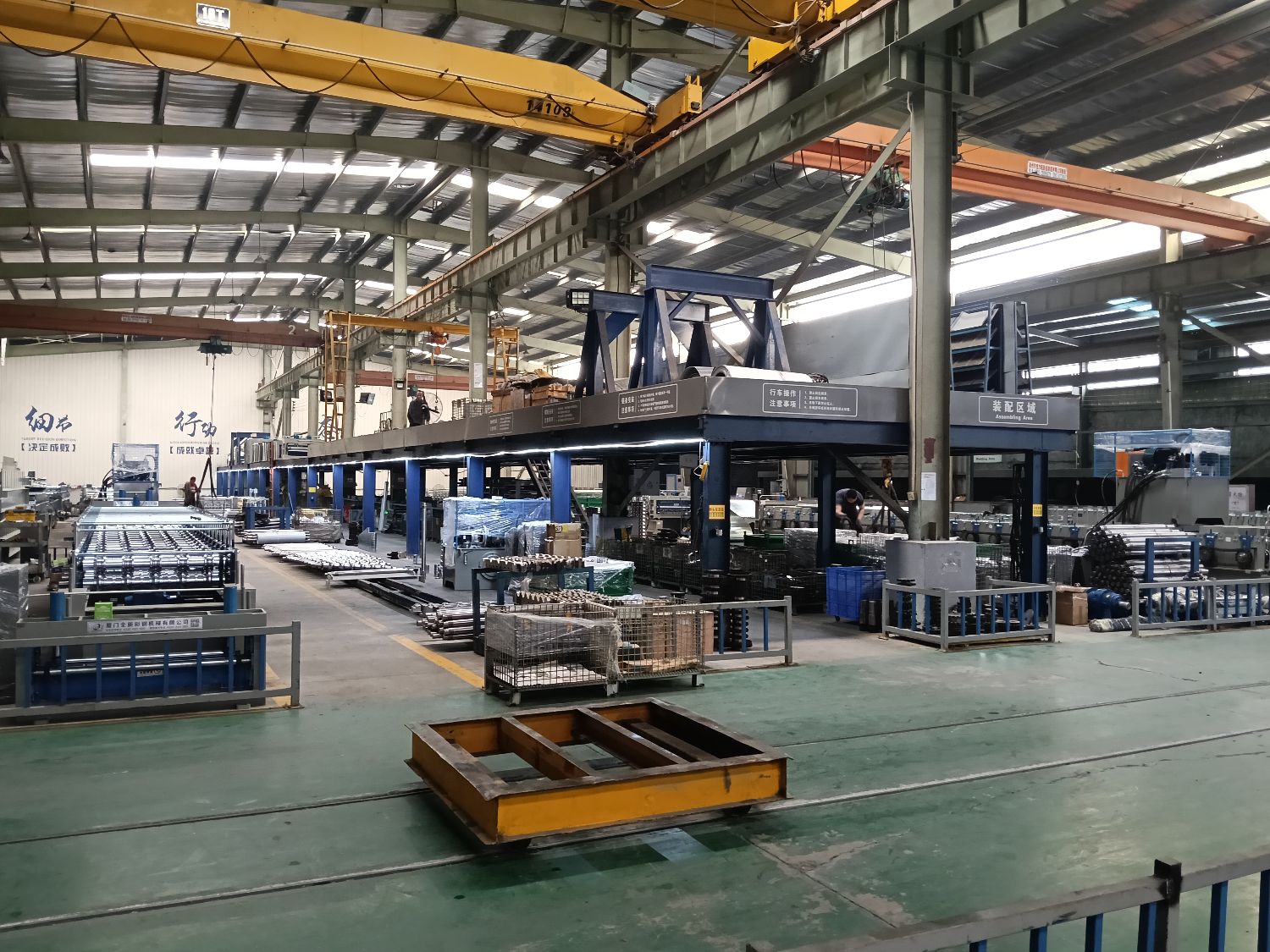
It depends on what you mean by "build." Walk through most equipment factories and you'll see a mix of raw fabrication and strategic outsourcing. The frame might be cut, welded, and painted on-site, while motors, gearboxes, and control systems arrive from specialized suppliers. So the factory does build machines in-house in the sense that final assembly, testing, and quality control happen under its own roof, but it rarely produces every component from scratch.
A more useful question is how much of the core engineering stays in-house. Some manufacturers deliberately keep the design, programming, and critical assembly steps internal because that's where reliability is determined. Others operate mainly as integrators, bolting together proven third-party modules and applying their own branding. If you're evaluating a supplier, ask to see the production floor, not just the brochure. You'll quickly spot whether they're genuinely manufacturing or just assembling someone else's work.
How Much Customization Can You Really Get?
Most tools cap you at swapping images and text within a fixed layout. You can change colors and fonts, but moving a button or resizing a section often isn't possible without upgrading to a plan that unlocks CSS. Even then, you're typically limited to adding small snippets rather than rewriting the entire front end.
The gap between advertised flexibility and actual control becomes obvious when you try to connect an external service or adjust how data is displayed. Many platforms expose APIs, but rate limits and restricted endpoints force you to work around limitations instead of building exactly what you want. If the feature isn't on the roadmap, you're stuck waiting.
Open-source alternatives give you full access to the code, but that means you're now responsible for every update, security patch, and plugin conflict. In short, customization ranges from "pick a template" to "maintain your own stack," with very little middle ground. Knowing where a platform falls on that spectrum before you commit can save months of frustration.
What Goes Into the Frame and Rollers?
A dependable sliding door starts with the frame's backbone. Extruded aluminum is the usual choice here, but not all profiles are equal. Thicker wall sections and internal webs keep the frame from twisting under daily use, while a thermally broken design adds a barrier between inside and outside temperatures. That keeps the track straight and the door moving without binding, even after years of weather swings.
The rollers carry the real workload, so their material and bearing design matter more than they look. Stainless steel or anodized aluminum wheels paired with sealed ball bearings resist corrosion and roll smoothly on a clean track. A softer, replaceable tire around the wheel absorbs small impacts and quiets operation, but it should not be the only thing taking the weight. Mounting brackets with vertical adjustment help you fine-tune the door's alignment without pulling the panel out of the frame.
Will They Still Answer Your Calls After Delivery?
It’s the quiet worry that hits after the contract is signed and the equipment is installed. The sales rep was everywhere during the pitch, but now that the invoice is paid, do they still pick up the phone? The honest answer depends less on promises and more on the structure behind the support team. Look for companies that assign a named contact after delivery, not just a general support line. If the person who closed the deal hands you off to someone else, that’s not automatically a red flag—it can actually mean the business has specialists for post-sale care. What matters is whether you get a direct number, a real email, and a clear response window before you need it.
A better test is to ask about their escalation path during the sales process. Don’t settle for “we’re always here for you.” Ask who answers after hours, how long a callback typically takes, and what happens if the first fix doesn’t work. Companies that still answer calls after delivery usually have a support roster that includes the original installer or technical lead, not just a call center reading from a script. Pay attention to how they handle a small issue in the first week—if that feels like pulling teeth, the long-term relationship will be worse.
You can also do a quiet check: call the support line before you buy, mention you’re considering them, and see how quickly a human responds. Then call back after hours with a routine question. If the experience is consistent, that’s a good sign. No company answers every call instantly, but the ones worth keeping will make sure your calls don’t disappear into a voicemail void after the delivery truck leaves.
Can You See Real Machines Running Before You Pay?
Nothing beats watching a machine actually work before you hand over any money. Photos and spec sheets can be edited or copied from elsewhere, but a live demonstration tells you far more about the condition, speed, and noise level of the equipment. If a seller refuses to show the machine running, that alone is a major red flag.
Many buyers get lured in by polished listings or low prices, only to discover hidden problems after payment. A real operating test forces the seller to prove the machine does what they claim. It also gives you a chance to ask an operator about maintenance history, common faults, and what daily use is really like.
Before you commit, always request a video call or an in-person visit where the machine is powered on and performing its main functions. Pay attention to unusual vibrations, leaks, or error messages that don't appear in still photos. If you can't see it running, walk away — there's usually a reason why.
Is the Price Quote Honest About Long-Term Costs?
A low upfront number can be tempting, but the real test is what that quote leaves out. Many providers quietly stack on fees for maintenance, software updates, or scaling once you're locked in. Ask for a breakdown that projects five years out, not just the first invoice. If the vendor hesitates to provide that, the "honest" price tag probably isn't.
Look beyond the base rate and dig into assumptions about usage, support hours, or data storage. A quote that seems too smooth often hides volatility in renewal terms or per-user surcharges. Compare not just the totals, but how easily each line item can change later. The most honest prices are the ones that stay boring over time.
FAQ
People focus heavily on the initial price and forget about things like the thickness of the machine frame, the quality of chrome plating on rollers, and whether the hydraulic cutting system is sourced from a known brand. These details affect how often you will need to adjust or repair the line later, not just how fast it runs on day one.
Request a breakdown of their previous custom projects that involved non-standard seam heights, unusual panel widths, or special materials like aluminum-zinc coated steel. A factory with real experience will be able to walk you through the engineering changes needed, not just send a generic brochure.
Yes, and you should insist on it. A short video showing your actual profile being formed from your coil material is the minimum. If they hesitate or want a deposit just for the trial, that can be a warning sign about their confidence in handling a custom job.
Look for a PLC system that allows you to store multiple profile recipes and adjust lengths, quantities, and speeds without digging into hidden menus. Cheap controllers often force you to rely on the factory for even simple changes, which becomes painful after delivery.
More than most buyers realize. If you plan to run both thin residential panels and thicker commercial gauges, the forming rollers and drive system must be designed for that range from the start. A machine built only for one narrow gauge will produce wavy panels or jam when you switch materials.
At minimum, they should provide clear installation drawings, a detailed manual in understandable English, and access to an engineer via video call during setup. The best suppliers will also keep common wear parts like cutting blades and roller bearings in stock and ship them quickly, rather than making you wait weeks.
Ask whether the decoiler can handle the maximum coil weight you expect to use and whether the cutting blade is made from tool steel that can be resharpened locally. Some factories use soft blades that need frequent replacement, which adds hidden cost and downtime.
Ask for a live video tour of the production floor showing machines being assembled, not just a showroom. Look for in-house machining equipment, organized assembly areas, and technicians performing quality checks. If possible, use a third-party inspection service to confirm the factory address and production capacity.
Conclusion
Before you wire any money to a Chinese standing seam machine builder, dig into whether they actually cut, weld, and assemble the frames and rollers on their own floor. Plenty of trading companies will show you a polished catalog and claim full factory ownership, but when you push for a live walk-through, the story falls apart. Ask to see raw steel stock, a working CNC table, and roller blanks in progress—not just finished machines sitting in a showroom. Real customization is another tell. If the salesperson says yes to every profile change, flange height, or drive option without consulting an engineer, you are probably dealing with a reseller. The best shops will walk you through the trade-offs: how a heavier frame changes vibration, why heat-treated rollers last longer on high-tensile steel, and what gauge range actually works without jamming.
Support after delivery matters as much as the machine itself. Before you pay, get a straight answer on response times when a sensor fails or a PLC glitch stops your line. Ask if they have a technical team that can video-call you at odd hours, and whether spare rollers and encoders ship quickly or sit in a warehouse queue. Also insist on seeing real machines running—not just edited clips—so you can hear the drive train, watch the lock seam form, and check the cut length consistency. Finally, make the price quote honest about long-term costs. Ask about spare roller sets, maintenance kits, power consumption, and potential import duties. A low sticker price that quietly adds thousands later is not a bargain.
Contact Us
Contact Person: Sophie
Email: [email protected]
Tel/WhatsApp: 8615959271231
Website: https://www.beenew-rollformer.com/