
Commercial Window Shades OEM Partner Evaluation Guide for Facility Managers
2026-08-30
Ask any facility manager who has dealt with sagging shades, mismatched fabric batches, or a vendor that goes silent after delivery, and they’ll tell you: the OEM partner matters more than the shade spec sheet. This guide gives you a field-tested framework for evaluating commercial window shade manufacturers—without the sales fluff. If you want to skip the trial-and-error phase, start by looking at how a partner like ROLLERGY handles prototyping, lead times, and post-installation support; those details reveal more than any brochure.
Separating True Manufacturers from Box Movers on the Factory Floor
Walk the floor and look for the unglamorous stuff. A true manufacturer will have raw material racks, shear brakes, injection molding machines, and a repair bench with half-finished boards—not just a clean table where boxes get opened and re-taped. Pay attention to how much of the assembly happens under that roof. If the answer is mostly firmware flashing and label swapping, you're probably standing in a box mover's warehouse with extra steps.
Ask a line operator to show you the current work order and the nonconforming parts bin. In a real factory, those are live documents and physical bins with dated red tags, because things actually go wrong. A reseller might have a binder of certificates but no quarantine area, no in-circuit test fixtures, and no one who can explain why a batch was held last month. One useful tell: ask to change a connector or cable length during the visit. A true manufacturer can call over an engineer and rework the BOM the same afternoon. A box mover will write down your request and promise to get back to you after contacting their supplier.
Also check how the product leaves the dock. Real factories pack from an internal bill of materials with rev-controlled labels and serialized test records; box movers often ship cartons that still contain the upstream factory's manual, sometimes with that name hastily covered. If the unit's firmware version doesn't match what the sales team promised, or the serial number decal lifts to reveal a different one underneath, you've just found the difference between making something and moving it.
Fabric Specifications That Survive Sun, Humidity, and Daily Abuse
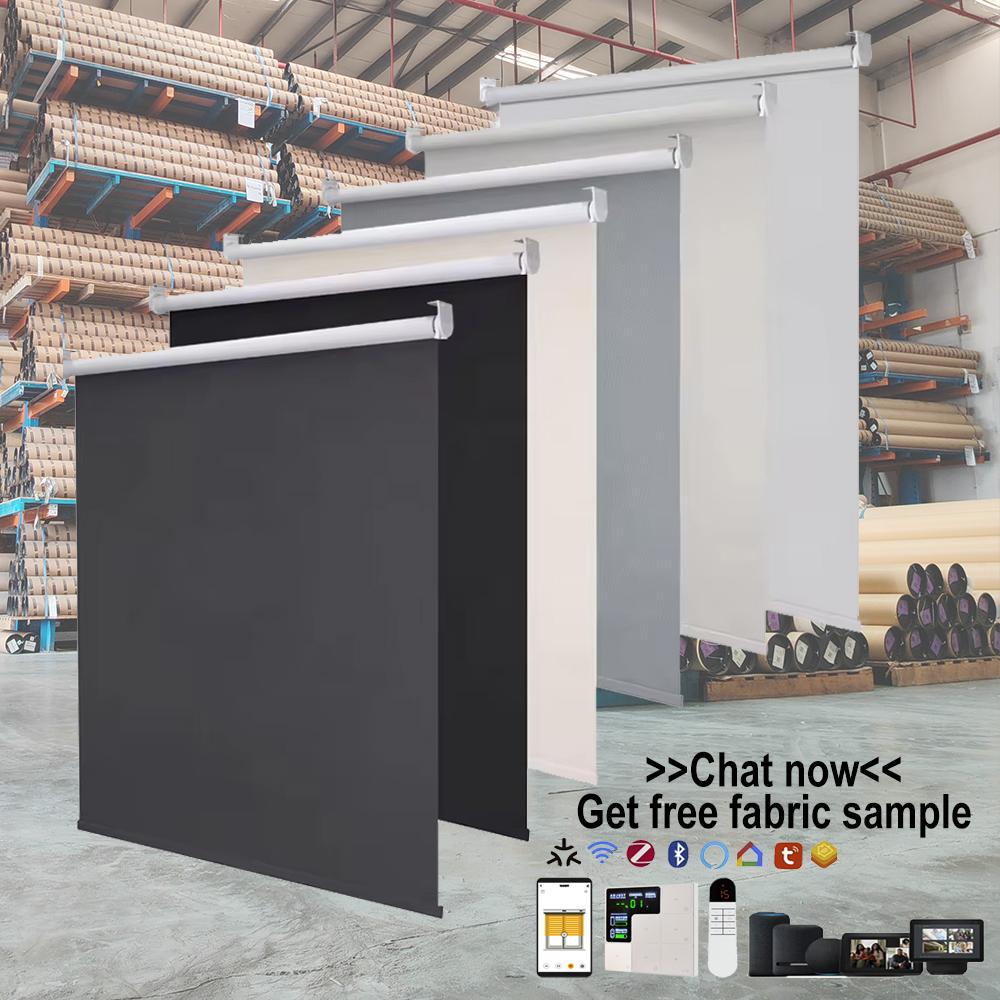
Sun damage comes less from heat than from UV radiation breaking down fiber polymers. Solution-dyed acrylic and pigment-extruded polyester hold their color because the pigment runs through the entire filament, not just on the surface. Look for a UV resistance rating above 1,000 hours in accelerated weathering and a loss of breaking strength under 10% after 500 hours of exposure. If the label mentions UV absorbers or hindered amine light stabilizers, even better—those additives slow the breakdown that causes brittleness and dusting.
Humidity is harder on outdoor fabric than rain. It encourages mildew inside the weave, and if the coating traps moisture, you get hydrolysis—where water molecules attack the polymer chain from the inside out. A good spec includes an antimicrobial treatment that's registered for the fiber type, plus a moisture-vapor transmission rate high enough to let humidity escape. Marine-grade vinyls with a fluoropolymer topcoat resist mold better than cheap acrylic-coated polyester, but even those need air circulation to stay sound.
Daily abuse shows up in the abrasion numbers. Wyzenbeek results above 30,000 double rubs separate furniture-grade fabric from something meant for a cushion that never moves. Tear strength matters at seams and grommets; a minimum of 15 pounds in the warp and 12 in the fill keeps a small snag from turning into a long rip. Also check seam slippage—under 1 mm at a 30-pound load means the stitching won't open up when someone drops into the chair hard. These numbers are boring until you're not replacing the same panel every spring.
Custom Hardware Details That Keep Installations Quiet and Square
The squareness of an installation often comes down to hardware that's machined with tighter tolerances than the cabinet box itself. Look for hinge plates with indexed mounting holes—these let you set a face frame or overlay door exactly 1/8 inch from the edge instead of relying on a pencil line. Small steel alignment tabs or plastic wedge blocks pinned under the plate keep the door from drifting after repeated use, and full-extension slides with a rear mounting socket prevent drawer fronts from twisting even when loaded unevenly.
Quiet operation starts at the contact points. Soft-close dampers built into hinge cups catch the door in the last inch and ease it shut, while nylon-tipped bumpers on strike plates kill the sharp snap of a magnetic catch. Drawer slides with nylon ball retainers or roller carriages move without the metallic ring of older steel-on-steel tracks, and a thin felt washer on each mounting screw stops the low-frequency rattle that travels through cabinet sides. These are small parts, but they determine whether a row of doors reads as one flat plane or a series of gaps.
Reading Warranty Fine Print Before the First Panel Ships
Most buyers flip straight to the headline number—25-year performance warranty, 25-year product warranty—and assume the panel is covered no matter what. That assumption starts falling apart the moment you dig into the fine print. Many warranties split coverage into two parts: one for manufacturing defects and one for gradual power loss. The product warranty often covers a shorter period than the performance warranty, and the performance warranty itself can be structured as a sliding scale rather than a flat guarantee. You might see “90% at year 10, 80% at year 25,” which sounds fine until you realize a panel that dips to 80.1% capacity in year 11 has technically missed the target and the claim can be denied under a strict reading.
What trips people up more often is not the degradation curve but the conditions attached to any claim. Fine print frequently requires installation by a certified or licensed contractor, completion of an online registration within 30 or 60 days, and proof of regular maintenance. Skip any one of these and a warranty that looked bulletproof can be void before the panels even arrive. Shipping damage is another gray zone. If a cracked panel is signed for without noting the damage on the delivery receipt, the manufacturer may refuse to replace it, pointing to the carrier's responsibility clause. That's why the window between order confirmation and the first panel shipping is the only sane time to read these clauses—once the boxes are stacked in your garage, the leverage shifts.
Pay special attention to what the warranty actually replaces. Some policies cover only the replacement panel, not the labor to remove the old one and install the new one, which can be the biggest part of the cost. Others prorate the value based on how many years the panel has been in service, meaning a failure in year 12 might get you a check for a fraction of the original price, not a new panel. And if you installed a model that has since been discontinued, the manufacturer may offer a “comparable” panel with different wattage or dimensions that your racking system can't accommodate without modification. Reading these details before the first panel ships gives you time to ask for written clarifications, negotiate a different warranty, or walk away before you're locked into a contract that quietly favors the seller.
The Lifecycle Math Behind Replacing Cheap Shades Every Three Years
Most people assume a pair of $15 gas station sunglasses is the frugal choice. But look at what actually happens over a decade: you replace them every three years when the hinges loosen or the lenses get scratched, so you buy four pairs instead of one. That's $60 plus the time spent hunting for a replacement, trying on flimsy frames, and dealing with UV coating that starts peeling after the first summer. A sturdier pair with a solid warranty might run $120, but if it survives eight to ten years with only a lens wipe now and then, the per-year cost drops below the cheap option.
There's also the hidden math of protection. Cheap lenses often carry a UV400 sticker, but that coating degrades faster than the frame—especially if they ride loose in a bag or sit on a dashboard. By year two, you might be getting less UV filtering than you think, which means more squinting and cumulative eye strain. If you replace them every 36 months like clockwork, the cycle repeats before you notice the drop-off. That rhythm turns a "small" recurring expense into a slow drip, one that quietly costs more than buying one well-built pair up front.
After the Handover: Service Response, Spare Parts, and Real Accountability
The moment equipment leaves the dock, many suppliers vanish into silence. Yet the real test of a partnership begins with the first breakdown, the first urgent call for help. A service team that answers within hours, not days, signals a company that has designed its operations around the customer's downtime, not its own convenience. Response time is not just a metric on a contract; it is a measure of respect for the buyer's production schedule.
Spare parts tell a similar story. A warehouse stocked with common components is not enough. The best suppliers maintain a transparent inventory system, share part numbers without hesitation, and offer overnight shipping for critical failures. When a gearbox fails at midnight, the ability to get a replacement shaft by morning separates a supplier who plans for longevity from one who only plans for the sale. Real accountability means the supplier has already mapped out which parts wear, which fail suddenly, and which should never leave the shelf.
Accountability, though, goes beyond logistics. It means owning mistakes without excuses. When a batch of bearings fails prematurely, a responsible partner investigates the root cause, issues a recall notice without being pushed, and covers the labor cost of replacement. It means the warranty is not a maze of fine print but a straightforward promise. Buyers remember who stood beside them at 2 a.m. with a wrench and a solution, not just who signed the purchase order.
FAQ
The real test is whether they handle non-standard window sizes and specialty fabrics without constant re-quoting. Ask for examples of recent projects with curved or angled windows, and check if their design team works directly with your facility's drawings instead of asking you to adapt to their catalog.
Request a detailed production timeline that maps how many units per week they can ship and how they stage deliveries for different floors or buildings. A reliable OEM will assign a dedicated project coordinator rather than leaving you to chase status updates through a generic email inbox.
At minimum, demand proof of fire-resistance ratings relevant to your building codes and any required environmental declarations. Don't accept a blanket claim of meeting all standards; ask for the specific test numbers and the issuing body so your facilities team can verify independently.
If the warranty only covers the motor but not the fabric, or if labor for replacing a faulty unit isn't included for the first year, treat that as a warning. Strong partners typically offer at least five years on mechanical parts and a clear process for on-site repairs without forcing you to ship large components back.
Ask for accelerated aging test results and real-world case studies from buildings with similar sun exposure. Pay attention to whether the OEM tracks fade rates or sagging over time—partners who collect post-installation performance data tend to engineer shades that last.
A transactional supplier answers only what you ask. A partner proactively brings up issues like glare control, cleaning access, and integration with your building management system. If they ask about occupant comfort patterns and maintenance schedules before quoting, that's a strong sign.
It's critical. Request a list of where core components like motors, fabrics, and brackets are sourced, and ask about their contingency plans for material shortages. A partner who can explain their buffer stock and alternative sourcing options gives you confidence for long-term facility operations.
Conclusion
Facility managers evaluating commercial window shade OEM partners quickly learn that the real differences are hidden in production realities rather than polished brochures. Walking the factory floor separates true manufacturers from box movers: you look for in-house extrusion, cutting, welding, and assembly lines, not just a warehouse of imported cartons. Fabric choices matter just as much, since commercial spaces punish textiles with direct sun, humidity from HVAC shifts, and constant handling. Ask for accelerated weathering data, tear strength, and cleanability tests instead of generic "contract grade" labels. Custom hardware often gets overlooked until rattling brackets or skewed hembars show up months after install; specifying extruded aluminum profiles, nylon guides, and adjustable tension systems keeps panels running quiet and square.
The paperwork side of an OEM relationship is equally telling. Warranty fine print reveals whether a partner actually stands behind its engineering: coverage should include fading, seam failure, and operator defects for at least five years, with labor allowances clearly stated. Lifecycle math makes the case for investing more upfront; replacing budget shades every three years often doubles total cost once you factor in labor, disruption, and disposal. Finally, the handover is only the starting point. Check that the OEM maintains regional service response times, stocks spare parts for discontinued lines, and assigns a named account manager. Real accountability shows up in how quickly a broken chain or a failed motor becomes a fixed problem, not in the sales pitch.
Contact Us
Contact Person: Vivien Cheng
Email: [email protected]
Tel/WhatsApp: +86 13751758835
Website: https://www.rollergytech.com/